The 80/20 Rule of Marketing Performance: Where Are You Wasting Budget?
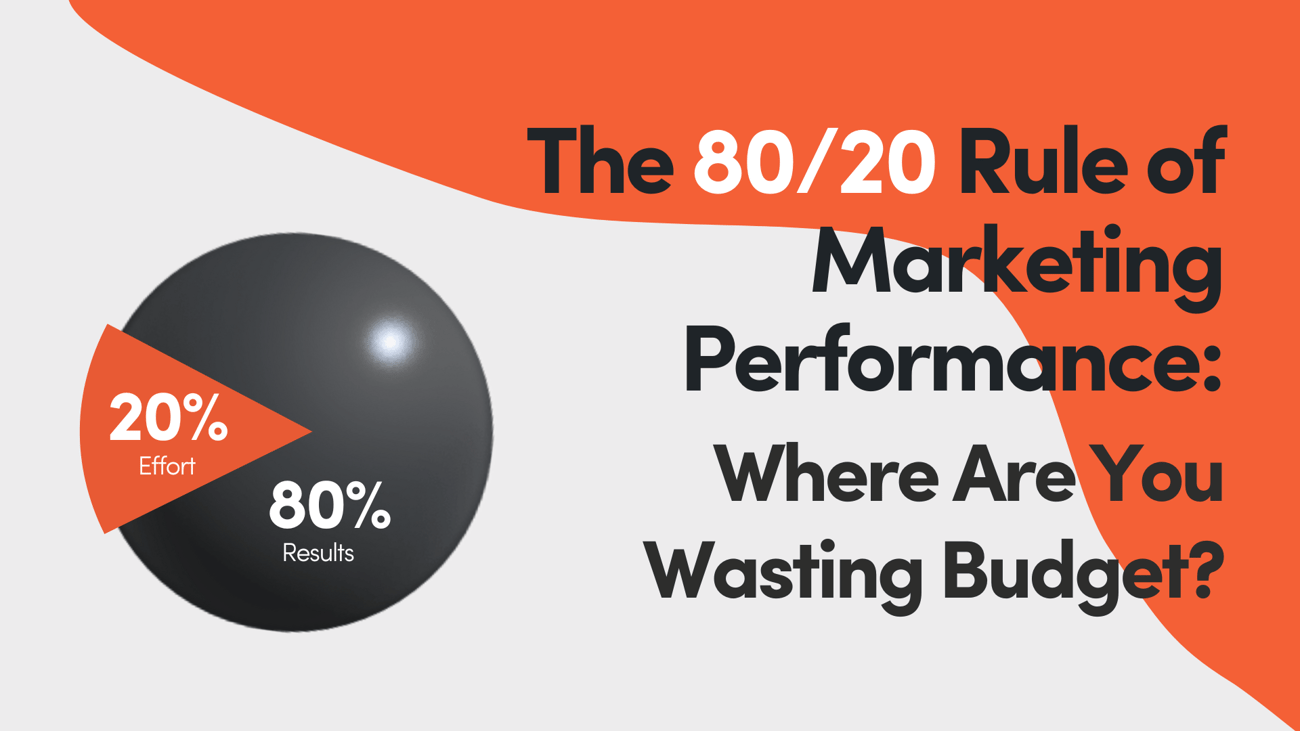
You’ve likely heard of the Pareto Principle, better known as the 80/20 rule.
In higher education marketing, this principle rings especially true, with roughly 80% of your results coming from 20% of your efforts.
But here’s the challenge: most institutions don’t know which 20% is driving enrolment and end up wasting budget trying to “fix” the rest.
Let’s fix that.
Where to look first
If your campaigns feel bloated or your results are flatlining, start with these three areas:
1️⃣ Channels. Are you spending equally across Meta, Google, LinkedIn, and email… even though one platform is clearly outperforming the rest for application starts or form fills? Shift budget toward the channels that consistently convert, not just the ones that look good on paper.
2️⃣ Audiences. Are you targeting all prospective students equally, even though recent grads or international audiences convert at a higher rate? Focus your efforts onyour highest-intent audience, then refine from there.
3️⃣ Creative. Which ad, headline, or landing page version actually drives inquiries or bookings? Letdata, not opinion, guide your iterations.
Quick tip: Pull a “winners and wasters” report
Once per term, we recommend pulling a breakdown of:
Top-performing campaigns by applications or campus bookings Lowest-performing campaigns by media spend Any tactics that look “busy” but don’t perform well (think: blog posts with zero time on page, or view-only video campaigns with no follow-up path)
This is all to say: kill your underperformers and double down on what’s working.
At Noetic Marketer, we’ve seen small shifts in budget allocation lead to major wins, such as:
➡️ Scaling down from 5 ad sets to 2 and watching CPL drop.
➡️ Replacing a generic nurture email series with a student-first sequence and doubling lead engagement
The bottom line? You don’t need more; you need better.
Want help finding your high-performing 20%? Let’s talk strategy that moves the needle.
When to Stop Chasing Trends and Start Doubling Down
From AI-generated everything to the newest TikTok feature, it can feel like there’s a new “must-try” tactic every other week.
So, how do you know when to jump in and when to just observe?
Here’s how we help our higher ed partners decide what’s worth the bandwidth:
If it doesn’t serve your institutional goals, it’s noise.
Before testing any new platform, format, or tactic, ask: Does this trend support our strategic goals for brand awareness, lead generation, or enrolment?
If not, it’s probably just a shiny distraction.
Is your foundation even ready for this?
If your program pages aren’t converting, your CRM isn’t automated, or your follow-up workflows aren’t in place, you’re not ready to “try something new.” You’re ready to optimize what you already have.
As we like to say, don’t build a rooftop patio if the foundation is still shaky.
Watch the early adopters. Learn from their experiments.
You don’t have to be first. You do have to be smart.
First, watch how peer institutions use emerging platforms or formats.
Learn from what worked (or didn’t), and adapt for your unique student audience and program mix.
Not sure what to double down on next? Our expert higher education marketing insights can help.
Let’s talk about what’s working, what’s not, and where your best opportunities really are.
Why CRO Deserves a Permanent Seat at the Strategy Table
At its core, conversion rate optimization (CRO) is the science (and art) of turning more of your existing student traffic into action (think: starting an application, requesting info, booking a call with admissions, etc).
Instead of pouring more money into traffic, CRO helps you maximize the value of the traffic you already have.
Think about it:
Improving your landing page conversion rate from 2% to 4% doubles your inquiries, without increasing ad spend.
Optimizing your mobile forms can recover countless leads that would otherwise bounce in frustration.
A/B testing your lead form copy might lift submissions by 30%, just by shifting a few words.
If your team is running digital ads, publishing landing pages, or launching lead generation campaigns without a CRO strategy in place, you’re leaving conversions and enrolments on the table.
Simple ways to start integrating CRO into your strategy:
Run quarterly audits of your top-performing program pages. Where are prospects dropping off? What’s stopping them from converting?
Prioritize mobile UX.Over 60% of traffic is mobile, yet many sites still have forms that are hard to complete on a phone.
Start small with A/B testing. Try a new headline, button placement, or CTA wording on your application page and let the data guide your next step.
Look beyond aesthetics. A beautifully designed site that doesn’t convert isn’t a win. It’s a missed opportunity.
At Noetic Marketer, we emphasize your CRO right from the start. It’s built into how we design higher education strategy, create content, and structure campaigns.
Discover how AI revolutionizes university marketing! Personalize student communication, automate tasks, and make data-driven decisions to boost enrollment. This guide provides actionable steps, top AI tools, and insights into future trends and ethical considerations for a winning strategy.
Facing fierce competition in higher education? Discover how video content can transform your recruitment efforts! Learn to create engaging videos that connect with prospective students and boost enrollment.
Facing declining enrollment? Discover 5 proven marketing strategies to attract undergraduate students! Learn how to engage Gen Z on social media, involve parents in the decision, build a strong institutional brand, recruit international students effectively, and organize impactful events.