4% of consumers say they never read online business reviews. 74% of consumers use two or more websites when researching business reviews. 75% consume video content when researching local businesses. 48% read AI-generated review summaries and then read positive and negative reviews. 18% are willing to make a decision based on an AI-generated review summary alone. 20% of undergrad students are parents. 74% of undergraduate student parents are women. 58% of incoming post-secondary students are worried about paying for their education. 56% of incoming post-secondary students have already applied for student aid. 21% of incoming post-secondary students intend to apply for student aid. 66% of applicants said they couldn't have afforded post-secondary without student aid. 81% said a sufficient scholarship could have persuaded them to study away from home.
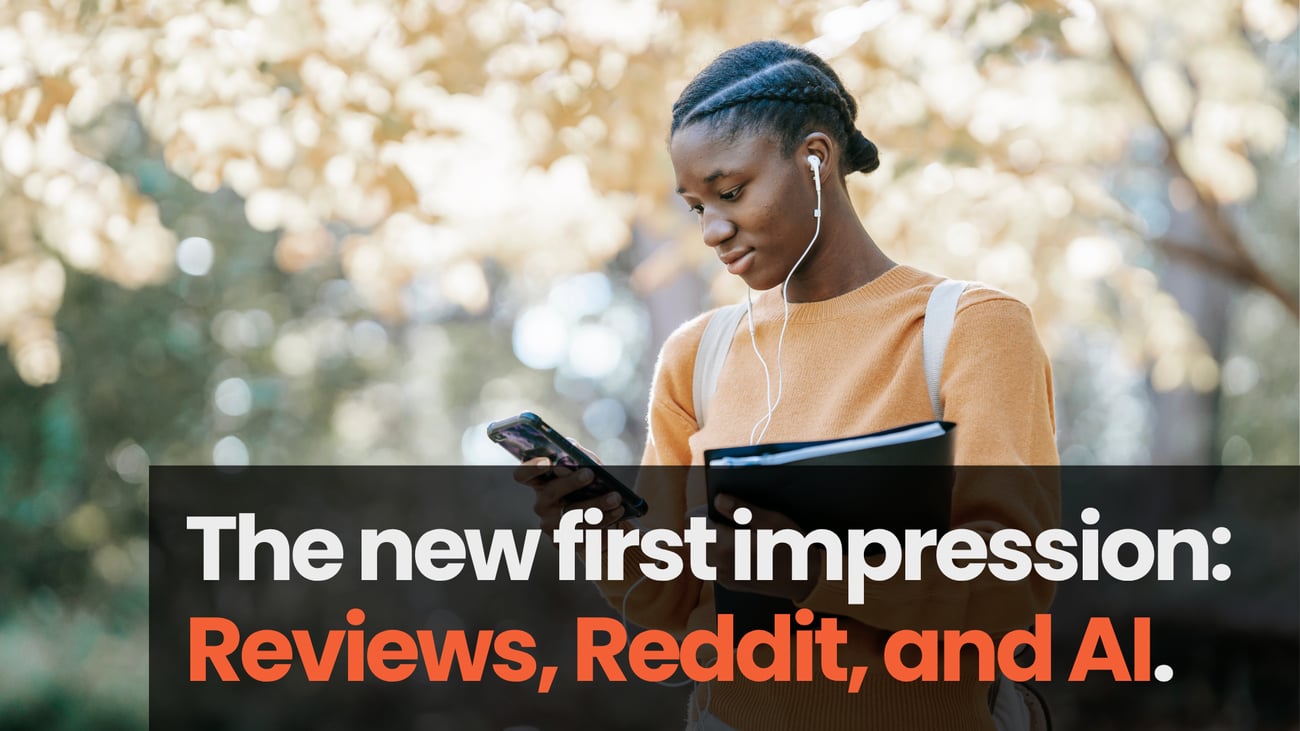
The new first impression: Reviews, Reddit, and AI.
A Google review, an alumni video, a Reddit discussion, or a student's social media post could all be shaping a student's view of your school or program.
According to a 2025 BrightLocal Consumer Survey, only 4% of people never read online business reviews. Meanwhile, 74% use multiple websites, and more than three-quarters consume video when researching local businesses.
The same survey found that 48% of consumers would read an AI-generated review summary before exploring individual reviews, and 18% would consider making a decision based on that alone.
This raises an important question for higher education:
What does someone discover about your institution before they ever speak to admissions?
Your next move:Make your student experience visible.
A strong reputation strategy should help prospective students discover:
➡️ What makes your institution distinct: The experiences, values, and opportunities that set you apart. ➡️ What your community values: Authentic perspectives from students, alumni, and families. ➡️ What campus life truly feels like: Student-led videos, campus tours, and everyday experiences. ➡️ How you respond to feedback: Thoughtful responses that demonstrate your commitment to students. ➡️ What supports your promises: Credible outcomes, accreditation, student experiences, and clear next steps.
A quick test:Search your institution as though you were a prospective student. Do the results reflect the experience and values your institution wants to communicate?
Make your institution's reputation more discoverableand authenticwith Noetic Marketer.
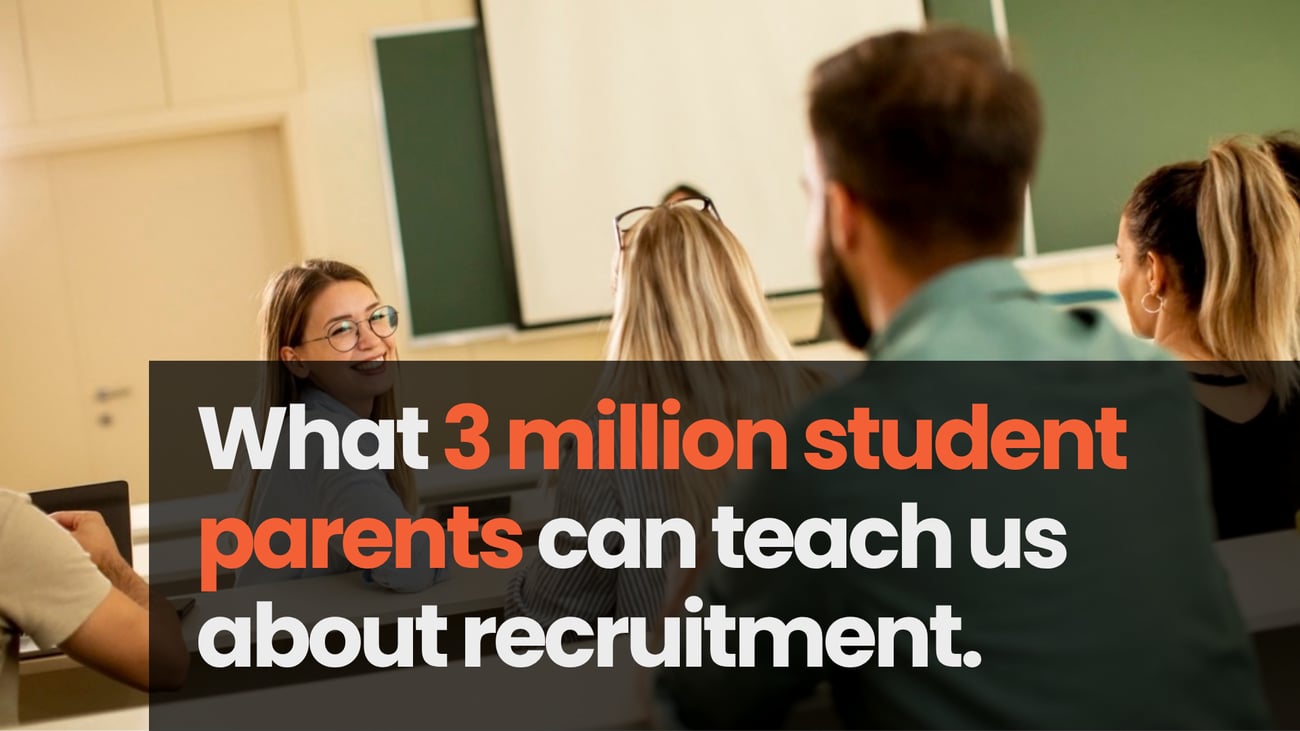
The research also found that student parents were more likely than their peers to delay enrolment, study part-time, and return to education after earning a previous credential.
For higher education institutions, this highlights an opportunity to make flexibility a tangible part of the student experience.
Your next move:Show students exactly what flexibility looks like.
Rather than promoting a program as online or part-time, help prospective students understand:
➡️ The time commitment: How many hours of coursework should they expect each week? ➡️ The learning experience: Are classes live, asynchronous, recorded, or offered at set times? ➡️ The support available: What academic, financial, and family-related resources can students access? ➡️ The options when life changes: Can students adjust their course load, pause their studies, or return later? ➡️ The experiences of students like them: How have other working adults and parents navigated their education?
Remember:Student-centred marketing helps prospective learners see how education fits into the lives they're already leading.
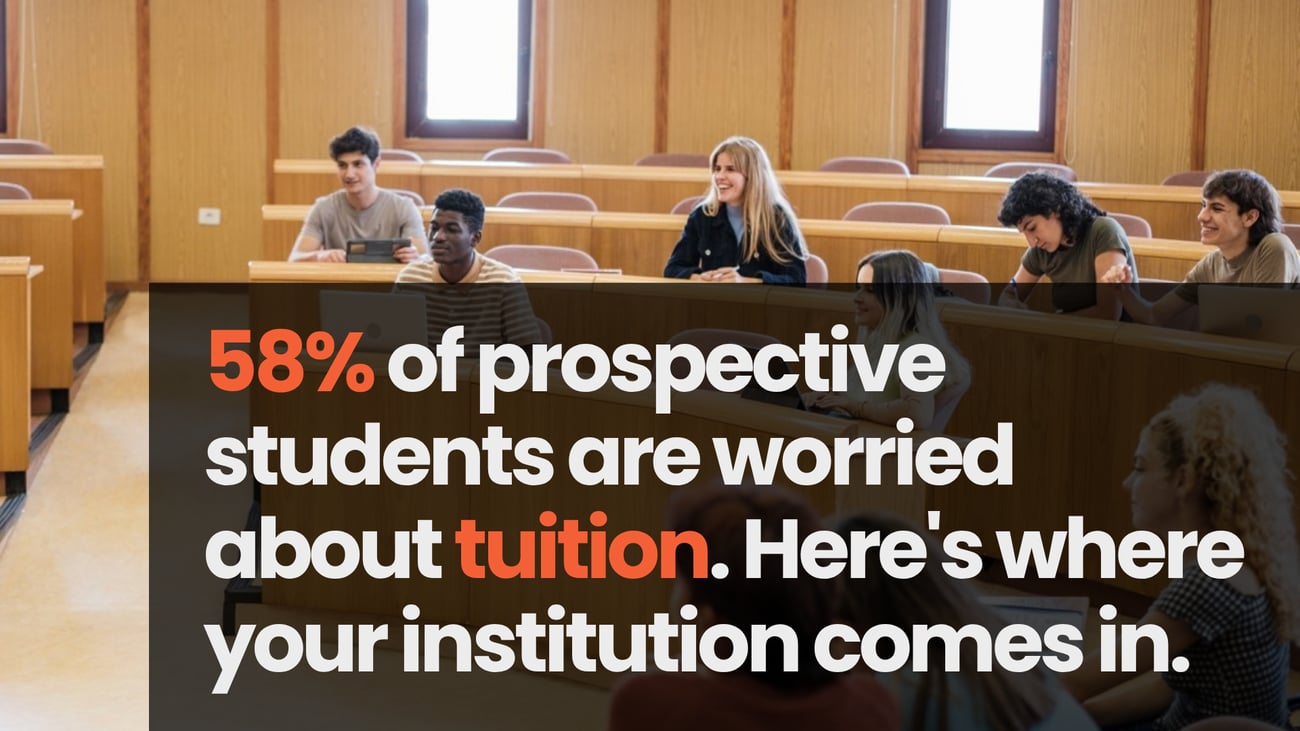
58% of prospective students are worried about tuition. Here's where your institution comes in.
Affordability is part of the enrolment decision long before tuition is due.
A 2025 Academica Group survey of incoming post-secondary applicants found that 58% were concerned about paying for their education.
56% had already applied for government student aid, with 66% saying they couldn't have afforded post-secondary education without financial assistance.
In the same survey, 81% said a sufficient scholarship could have persuaded them to attend an institution away from home.
For enrolment teams, this creates an opportunity to treat financial aid information as a valuable part of student recruitment; not just another administrative resource.
Your next move: Make funding part of the conversation from day one.
➡️ Make funding visible: Include relevant scholarships, bursaries, grants, and financial aid options on program and recruitment pages. ➡️ Explain eligibility clearly: Help students understand which awards they may qualify for and how to apply. ➡️ Simplify the timeline: Communicate application deadlines, required documents, and when funding decisions are made. ➡️ Connect cost with value: Provide transparent tuition information alongside learning opportunities and career pathways. ➡️ Build funding into follow-up: Use email nurture, information sessions, and admissions communications to answer financial aid questions.
Let's build an enrolment journey that connects your institution's value with the needsand prioritiesof the students you want to reach.
As study permit caps drive down international enrolment, universities must build stronger domestic recruitment strategies to protect revenue. This guide outlines how to audit regional demand, segment target audiences, personalize CRM outreach, and use video and peer ambassadors to turn prospective inquiries into committed enrolments.
In 2026, building brand trust with prospective students is essential for university recruitment. Discover how higher education institutions can reduce student anxiety, establish visual and narrative consistency, and leverage authentic student proof to strengthen institutional credibility and drive measurable enrolment growth.
Charter schools must actively recruit families to thrive. Discover how these institutions build trust and drive enrolment through strategic community outreach, word-of-mouth advocacy, and a robust digital presence that reaches parents online.